Surviving the National Institute of Ecology in Seocheon: A Spring Family Guide 🌿
Spring in Korea often brings a mix of excitement for blooming flowers and the challenge of unpredictable fine dust or sudden temperature swings. If you are planning a family outing with children, finding a location that balances outdoor freedom with indoor backup plans is essential. The National Institute of Ecology (NIE) in Seocheon is often cited as a highly regarded destination for this exact reason. However, its massive scale—spanning over 1.1 million square meters—means that a "casual stroll" can quickly turn into an exhausting marathon if you don't have a solid strategy.
Based on recent observations and the shared experiences of frequent visitors, this guide breaks down how to navigate this ecological giant during the spring season without losing your sanity or your energy.
The Reality of the Atmosphere
The National Institute of Ecology is not a typical zoo or a manicured botanical garden. It is a research-heavy facility that focuses on biodiversity. This means the exhibits are designed to be educational and realistic rather than purely "pretty" for social media photos.
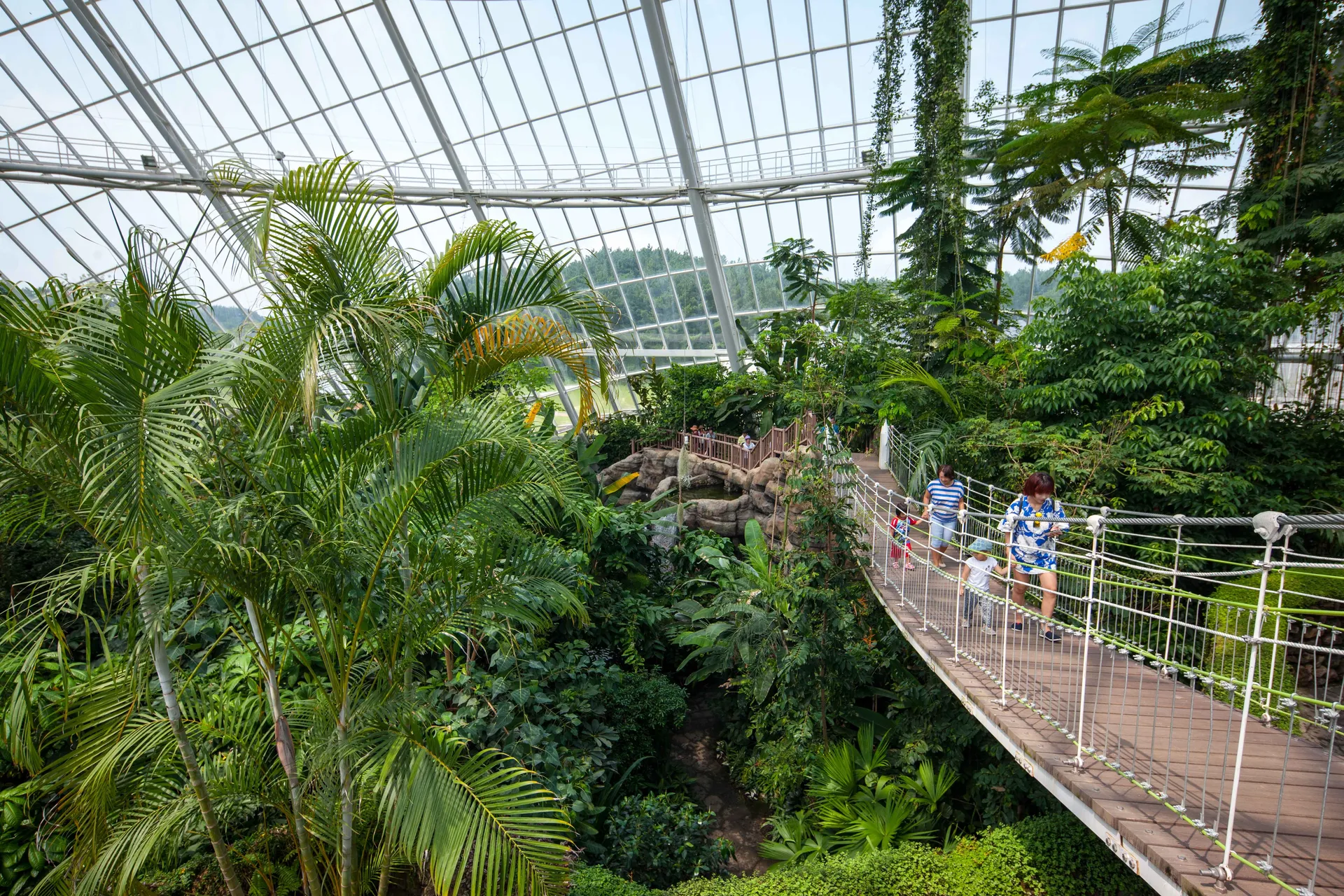
The centerpiece is the Ecorium, a massive glass-domed structure housing five distinct climate zones. In spring, the contrast between the crisp, sometimes chilly Seocheon wind and the controlled environments inside is striking. You will start in the Tropical Zone, where the humidity is high enough to instantly fog up your glasses or camera lenses. Within an hour, you might find yourself in the Polar Zone, standing in front of Gentoo penguins in a sub-zero environment.
Outside the Ecorium, the spring landscape is vast. While the cherry blossoms and wild sprouts are beautiful, the sheer openness of the site means there is very little protection from the sun or wind. It feels "wilder" than a city park, which is refreshing but requires physical preparation.
Practical Visiting Strategy
1. Timing and Crowd Management
If you are visiting on a weekend in April or May, arriving by around 10:00 AM is generally recommended. The facility opens at 9:30 AM. By noon, the parking lots near the main gate can become crowded, and the line for the internal electric shuttle may stretch to a 30-minute wait. For families with toddlers, arriving earlier often helps secure a smoother entry and a closer parking spot.
2. The Movement Route
The distance from the main entrance to the Ecorium is roughly 1 kilometer. While there is a shuttle bus (the "Electric Train"), the queue can sometimes be frustrating.
-
The Pro Move: If the weather is mild, walk from the main gate toward the "Deer Enclosure" first. This allows the kids to see the long-tailed goral and deer early on while they still have high energy. You can then approach the Ecorium from the side.
-
The Efficiency Route: Take the shuttle to the Ecorium to save leg power for the indoor exhibits, then walk back through the outdoor gardens and the Hadaram Playground on your way out.
3. Estimated Duration and Energy Level
Do not expect to see everything in two hours. A thorough visit, including the playground and a meal, usually takes at least 4 to 5 hours. The energy level required is relatively high. Even with the shuttle, you will likely clock over 10,000 steps. If your child is under five years old, bringing a sturdy stroller or wagon is strongly recommended. The paths are well-paved, making the area very wagon-friendly.
Deep Dive into the Ecorium Zones
The Ecorium is a loop. Once you enter the Tropical Zone, you follow a continuous path through the different environments.
-
Tropical Zone: Be prepared for the heat. If you are wearing heavy spring jackets, carry them in a bag or use the lockers at the entrance. The towering trees and aquarium section are highlights, though the humidity can feel intense for some visitors.
-
Desert Zone: Here you will find prairie dogs and various cacti. It’s a dry heat, which can feel refreshing after the Tropical Zone. Look for the reptiles that blend into the sand.
-
Mediterranean & Temperate Zones: These feel more like a greenhouse environment but with stronger ecological storytelling. The Temperate Zone features local Korean flora and fauna, which adds educational context about the surrounding Seocheon ecosystem.
-
Polar Zone: This is the shortest but most popular section. The penguins are the main attraction here. Since it is kept quite cold, it provides a refreshing contrast before you head back outside.
A Realistic Scenario: The "Hadaram" Factor
Imagine this: You have spent two hours walking through the Ecorium. Your children are starting to get "museum fatigue." This is the moment you head to the Hadaram Playground. Located outdoors between the Ecorium and the main gate, this is considered one of the better-designed large-scale playgrounds in the region.
The realistic challenge here is that once children enter the Hadaram area, they often don’t want to leave. Parents frequently find themselves staying here for an hour or more. Use this as your rest period. There are shaded benches nearby, though they fill up quickly.
This is also where families need to be careful: the transition from the sweaty Tropical Zone to a windy outdoor playground can sometimes lead to post-trip sniffles. Having a dry change of clothes or a windbreaker ready can help.
Risk and Preparation Notes
The Food Situation
The internal food court is located on the second floor of the Ecorium. While it is convenient, visitor reviews are mixed. The menu consists of standard fare like tonkatsu, bibimbap, and noodles. During peak spring weekends, it can become loud and crowded, and wait times may exceed 20 minutes.
- Strategy: Pack a light picnic. There are designated picnic zones with tables near the playground and the pond. Bringing your own sandwiches and water can reduce costs and help avoid crowded dining areas.
Weather Contingency
Spring in the Geumgang River estuary (where the NIE is located) can be significantly windier than inland cities like Seoul or Daejeon. Even if the forecast says 15°C (59°F), the wind chill near the water can make it feel cooler. Dressing in layers is helpful.
Re-entry Policy
Keep your ticket. Re-entry is permitted within the same day. This can be useful if you leave something in the car or if you want to grab a meal at one of the local restaurants just outside the gate before returning.
Budget and Logistics
-
Entry Impression: The admission fee is relatively low for a facility of this scale (usually around 5,000 KRW for adults, with discounts for children and seniors). It provides strong educational value compared to many attractions.
-
Public Transport: The NIE is uniquely positioned right next to Janghang Station. If you take the Mugunghwa train, you can walk from the station to the back gate of the institute in under 5 minutes. For visitors coming from Seoul or neighboring provinces, the train can be a convenient way to avoid weekend traffic.
-
Parking: There are multiple parking lots. If the main lot near the main gate is full, follow the signs to the secondary lots. They are further away, but shuttle buses run regularly.
Conclusion
The National Institute of Ecology in Seocheon is a rare place that manages to be highly educational while still engaging for families. In the spring, it becomes a vibrant outdoor learning environment. However, its greatest strength—its size—can also make planning important for families with young children.
To have a smoother visit, dress in layers, bring a wagon or stroller for younger kids, and manage expectations about the food court. By prioritizing the Ecorium in the morning and the Hadaram Playground later in the day, families can create a balanced outing that combines learning and play. It is a place that rewards visitors who come prepared for a long but memorable day exploring nature.